

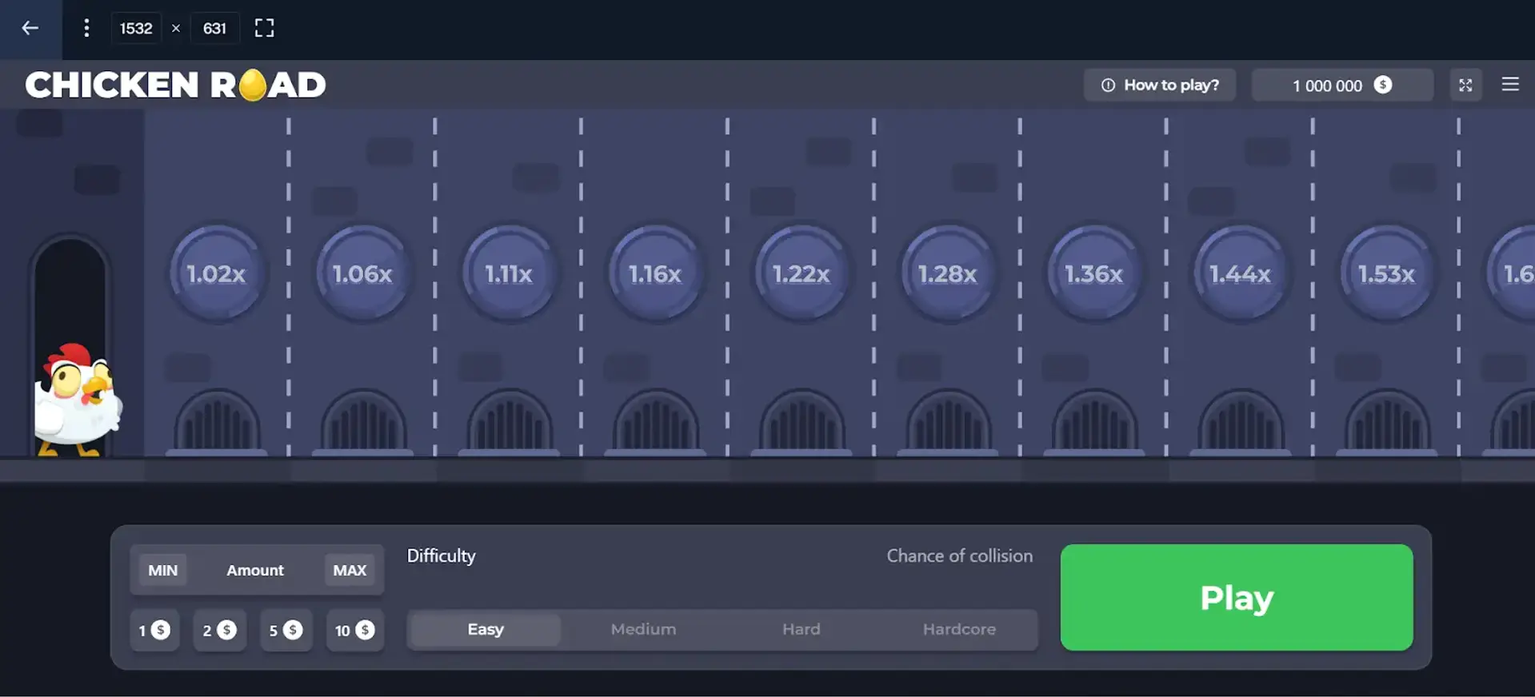






Chicken Road App: Mobile Use In Italy
Discover how to use Chicken Road on smartphones in Italy, set limits, top up your account, and manage sessions with control.
Chicken Road App: Why It's Popular On Mobile In 2026
Chicken Road is designed for quick sessions, with simple choices that immediately become personal: how much to risk, when to stop, how to react when the streak changes pace. In Italy you can find this experience on dedicated platforms that operate according to applicable rules and with access reserved for adults, so it makes sense to start with an orderly approach instead of jumping in "by feeling".
Imagine opening the game during your lunch break and only wanting to play for a few minutes. If you don't set a boundary, those minutes stretch out and you end up playing distracted. Usually, players who have the most fun decide the duration beforehand, then start, and stop without arguing with themselves.
In 2026, it's better to stop looking for shortcuts and build a short routine: start, play your block, stop, done. When the choice is clear, even the variability of the result weighs less.
All promotional incentive structure is clearly stated in writing and/or via electronic means in an easily understood manner. All codes are accompanied by an explanation of what the code is for, who is eligible to use the code, and how it should be used. As such, players are less likely to be confused about what is required of them in order to receive a reward and how the reward will be applied after receiving it. The promotional incentives provided to participants provide them with time to become familiar with the gaming system's mechanics, their interface, and progress, before deciding how deeply they wish to become involved with this platform. Therefore, players are encouraged to participate in an informed manner, rather than being pressured or tempted to act quickly.
How To Securely Prepare Your Account
Registration, data confirmation, and profile security are not details: they are the basis for managing deposits, withdrawals, and support smoothly. Choose a unique password, activate any additional verifications if available, and check that your name and details match your documents.
Imagine reaching the withdrawal moment and discovering a wrong letter in your surname. If that happens, you have to stop and ask for corrections. Usually, just rereading everything calmly once is enough to avoid the hassle.
Also organize the context: essential notifications, language, privacy preferences. Avoid keeping too many sessions open in parallel and use only one device, so controls remain linear.
Installation And First Access In A Few Steps
Installing a title on mobile in 2026 doesn't just mean tapping "install". It means understanding where the file comes from, what permissions it requires, and how to react if the device signals something unusual. If you want to play calmly, do two checks before starting: free space and system updates.
Imagine being on the couch, shaky connection, low battery, and you still try to log in. If it starts badly, you get annoyed and then play worse. Usually, it's better to fix the context and start when everything is stable.
Chicken Road Apk: Checks Before Installation
On Android, the installation package often comes into play. The practical rule is one: only trust authorized channels and check what you are granting to the phone. If you are offered an external file, do not bypass the warnings "just because".
Imagine receiving a message with a file to install "because it's faster". If you do it on impulse, you risk installing something you didn't want. Usually, more cautious players pause, check the settings, and if something isn't convincing, they give up.
After installation, log in and immediately look at the profile options: spending limits, time limits, notifications. Getting these things right at the beginning is easier than doing it in the middle of a session.
Chicken Road App Casino: Settings For Playing Smart
Once inside, the goal is to avoid autopilot mode. Set a duration reminder, choose a budget for the single session, and decide an exit rule that doesn't depend on your mood. If the account offers self-control tools, use them as a steering wheel, not as an emergency siren.
Imagine seeing a good streak and thinking "now I'll raise and push". If you do it without a plan, you turn a pleasant moment into stress. Usually, it's better to close the block, breathe, and decide after a short break.
Also keep security under control: screen lock access, any confirmations for operations, and transaction notifications.
Permissions And Notifications: What To Keep Active
Grant only what is truly necessary: transaction alerts and time reminders can help you, while permissions not related to the game should be carefully evaluated. Imagine activating everything and finding your phone full of pop-ups: after a while, you ignore them and lose even the useful ones. Usually, it's better to start minimalist and add only if something is missing.
Updates and Space: How to Avoid Blocks
Update when you are on a stable network and have enough battery. Imagine doing it five minutes before going out and finding yourself with a interrupted download: you carry frustration and risk forcing unnecessary steps. Usually, those who keep things tidy check free space, update, restart if necessary, then play.
Payments and Withdrawals in Italy Without Confusion
Money operations deserve a method. Choose a deposit method you understand, avoid changing it constantly, and prepare in advance what may be required for security checks. You don't need to know “perfect times”: you need to know what steps you take and what to check if something gets stuck.
Imagine wanting to quickly top up after a heavy day, without even looking at your daily limit. If you do, you risk exceeding the budget you promised yourself. Usually, it's better to top up only the session amount, not “for stock”.
Useful Item | Why It Matters | What to Check First | Helpful Habit |
Deposit Method | Influences convenience and checks | Personal limits and confirmations | Always use the same method |
Withdrawal Request | Requires consistent data | Header and documents | Check the data with a clear mind |
Transaction History | Gives you clarity on sessions | Dates and amounts | Annotate your sessions in a few lines |
Assistance | Reduces time when you write well | Clear message and useful details | Ask one question at a time |
Top-ups and Limits: Practical Choices
Treat deposit as planning, not as an emotional response. Decide beforehand how much you want to use today, then top up only that amount. If you can set daily or weekly limits, set them with a realistic margin.
Imagine saying “I'll put in a little” and then repeating the operation multiple times because you don't want to stop. If that happens, the problem isn't the amount, it's the behavior. Usually, it helps to set a maximum number of top-ups and stick to it.
Withdrawals and Verification: Prepare in Advance
To withdraw without stress, the most useful thing is consistency: same data, same account holder, same steps. If you are asked for verification, deal with it when you have time, not when you are in a hurry.
Imagine wanting to withdraw late at night and discovering you need to do an additional confirmation. If you're tired, you get irritated and make mistakes. Usually, it's better to postpone until you're clear-headed and complete the steps calmly.
History and Receipts: Keep Everything Tracked
History is your mirror. Check it after each session and note two things: how much you used and how long you played. Short, regular notes are enough.
Imagine feeling like you've played "little," but then you look at the movements and discover many small operations. If you see it, you can correct it immediately. Usually, those who monitor often avoid drifts without realizing it.
Budget Management And Responsible Sessions
The easiest way to stay in control is to break it down: small budget, short sessions, real breaks. In 2026, with your phone always in hand, discipline is primarily environmental: timers, useful notifications, and closing the application when you're done.
Imagine playing while watching a series and making decisions without thinking. If you do, you lose track of time and money. Usually, it's better to choose: either entertainment, or a short, focused game.
15-30 Minute Plan That Works
Decide on a duration and stick to it. Start with a short block, then take a break away from the screen: get up, drink water, look away. If you want to continue, only restart after the break.
Imagine telling yourself "just five more minutes" and repeating it multiple times. It's a classic. Usually, those who avoid this trick use a timer and, when it rings, really close it.
Also define a goal: today I just want to try the rhythm, or I want to relax. If the goal is to "recover," stop before you start.
Stop-Loss And Stop-Win Without Chasing
Set two thresholds: one to stop when you're losing and one to stop when you're winning. The second protects against "giving everything back." Choose thresholds that feel realistic, otherwise you'll ignore them.
Imagine having a good streak and thinking that the best part has just begun. If you continue out of euphoria, you often return to the starting point. Usually, it's better to close on a high note, even if it feels like you're leaving something on the table.
When you hit a threshold, make a physical gesture: close it and put the phone away for a few minutes.
Timeout And Long Break: When To Press Stop
If you notice irritation, haste, or an urge to raise the stakes for no reason, don't try to "resist": stop. A short break may be enough, but sometimes a longer timeout is needed.
Imagine coming back every evening with the idea of "fixing" the day. If that happens, you're using the game as an emotional regulator. Usually, a break of a few days, with reduced notifications and alternative routines, puts things back in order.
During the timeout, change context: walk, play sports, call a friend. If you keep scrolling on your phone, you'll return too easily.
Privacy And Notifications: Protect Your Routine
Playing on mobile also means managing privacy. Don't leave your profile open, avoid access on shared devices, and check notifications on the lock screen.
Imagine receiving an alert while you're at dinner and feeling "pulled" to go back. If that happens, disable non-essential messages and remain in control of your decisions. Usually, those who control notifications also control their sessions.
Gaming Experience: Rhythm, Emotions, Decisions
The hardest part is not understanding the rules, it's managing your mind. The game alternates fast and slow moments, and you must remain consistent: same routine, same limits, same way of closing. When you change strategy out of frustration, you lose control.
Imagine seeing a near-event and interpreting it as a signal. If you chase those signals, the session lengthens and becomes nervous. Usually, more stable players treat each round as independent and focus on time, budget, and breaks.
Final Routine To Stay Sharp In 2026
Close each session with three steps: check your history, make a brief note on how you felt, then exit. If you want to re-enter, wait at least ten minutes and ask yourself why.
Imagine closing and immediately reopening "just to see." It's the fastest way to overdo it. Usually, just moving the phone and making a different gesture is enough to break the impulse.
Remember that fun is compatible with limits. If you don't feel like it one evening, you don't have to force yourself to play.
FAQ
How to install securely on Android without risks?
First, check that the device is updated and that there is enough free space, then use only authorized channels and read security warnings instead of quickly closing them. Imagine receiving a file from a chat and wanting to open it immediately: if you do it impulsively, you lose control of what you're giving to the phone. Usually, it's better to stop, check permissions and settings, and give up if something doesn't add up.
What settings help you not to overdo it with sessions?
Timers, deposit limits, and transaction notifications are three useful levers because they remind you of time and money while playing. Imagine starting “just for a moment” and ending up extending the evening: without an external reminder, it's easy not to notice. It usually works to set a fixed duration and stop when the alarm rings.
What do you do if the withdrawal request seems slow?
Stay calm and first check profile data, consistency of the account holder, and any requested verifications. Imagine trying at the end of the day, tired, and making a data error: you risk adding unnecessary delays. It's usually best to complete verifications when you have time and write to support with a single, clear question.
How do you manage your budget if you often play on your phone?
Divide your budget into sessions and only top up the amount planned for a single session, not an amount “to be on the safe side.” Imagine making many small top-ups because you don't want to stop: in the end, you spend more than you thought. It usually helps to set a maximum number of top-ups and include a break between them.
When is the right time to use a timeout?
When you feel irritation, haste, or the urge to chase a loss, a timeout is effective because it interrupts the behavior before it becomes automatic. Imagine coming back every evening with the idea of “fixing” the day: that's a sign you're not playing for pleasure. Usually, a break of a few days, with reduced notifications and alternative routines, brings you back to making clear decisions.
How do you avoid playing impulsively after a win?
Treat the win as a closing point, not as fuel to push harder. Imagine feeling “in shape” and immediately raising the stake: you often give back what you just gained. It usually works to close, take a real break, and decide later, with a clear head.
What signs indicate that you should stop immediately?
Increased speed, irritation, and the desire to change stakes without reason are typical signs. Imagine clicking faster because “it has to happen”: that's when you lose clarity. Usually, it's enough to stop, put the phone away for ten minutes, and do something different, so the impulse subsides.